
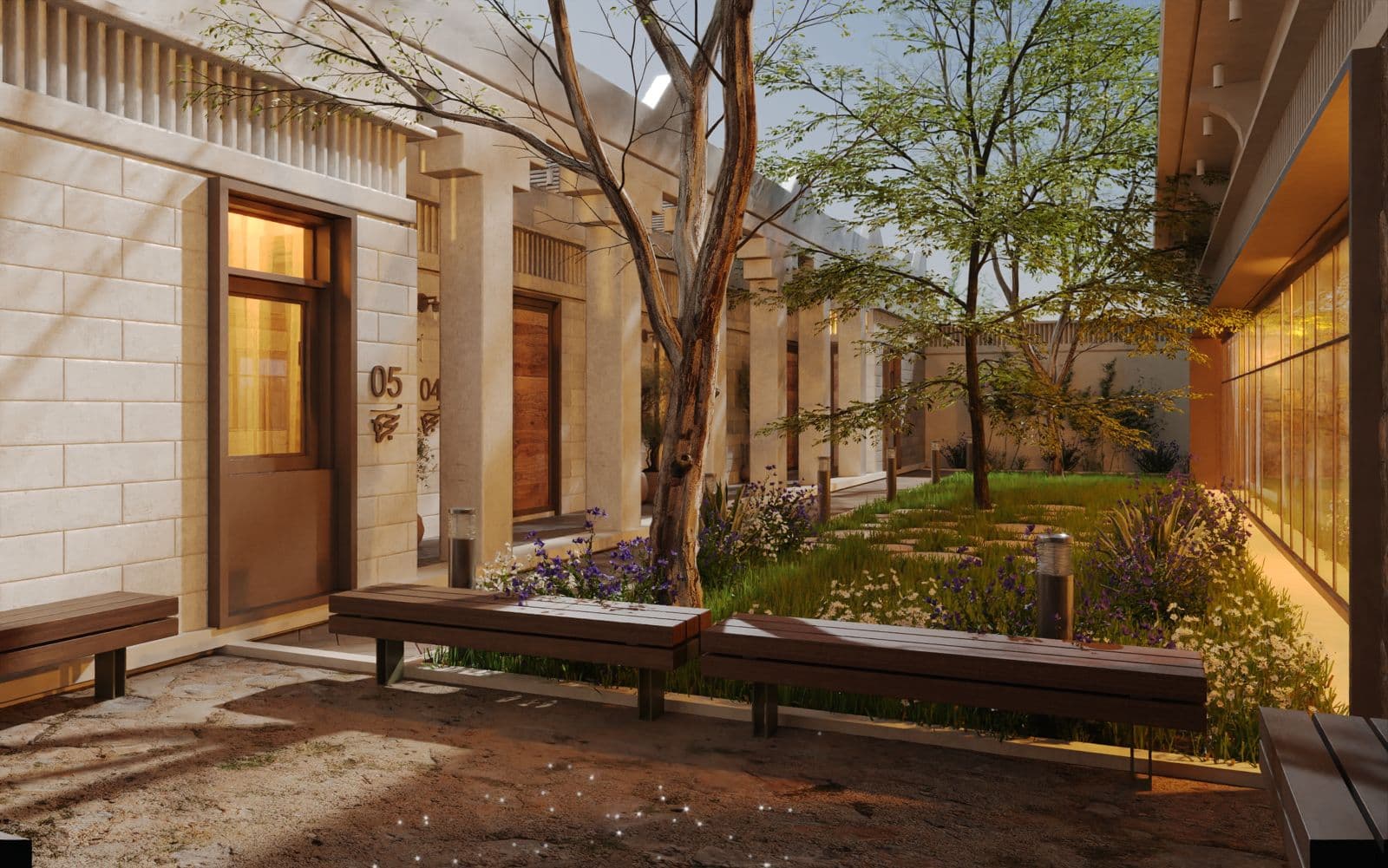
Between the Farm and the Retreat: A Struggle Over Land and Identity
As I reflect on your lands that we reviewed earlier—from that vast tract belonging to the Northwestern Company to the scattered plots in Dhahra Al-Awda, east and west—I find in them a tangible embodiment of the struggle you describe between the farm and the retreat.
We stand on lands in Diriyah, the heart of an old agricultural memory, yet the language of documents speaks in terms of plans, blocks, and residential plots. These lands, some exceeding nine thousand square meters, could have been a true countryside overflowing with the scent of soil and alfalfa. Instead, they are turning into silent spaces behind concrete walls—just as you described them—closed retreats that give neither face nor spirit to the city.
The harshness you sense in the features of our major cities is not merely a visual illusion; it is a natural consequence of the absence of that open green belt. We have replaced a countryside that welcomed passersby with enclosed real estate grids, even in pristine areas like Al-Jubailah and Al-Ammariyah.
This sensory absence of the countryside is matched by a deeper absence of the sea. Despite possessing a majestic coastal geography, our relationship with it has remained that of passersby rather than emotionally rooted inhabitants—as if the Saudi consciousness still fears the salt and longs for the sand.
Social geography tells us that when people are deprived of free interaction with nature, they create their own “kashta” as an act of quiet rebellion—liberating their senses, if only for a few hours, from the weight of these rigid cities that have become places without a countryside to protect them or a sea to inhabit their poetry.
We possess the space, as your ownership documents clearly show, yet we still lack the philosophy that can transform these spaces from mere numbers in real estate deeds into a living lung—breathing with people and restoring the city’s lost identity.
Share